Socrates, the Hodie, and Zeno's Arrow
Truth isn't coherence — it's correspondence with what lies outside the system. That's why walled gardens are the enemy of truth.

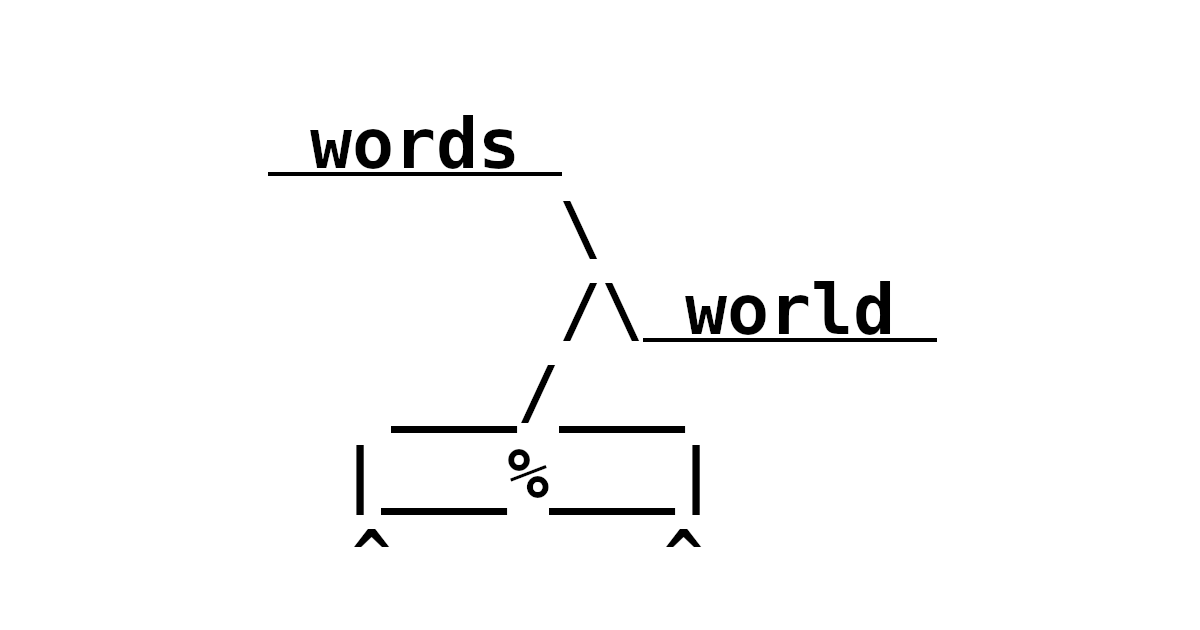
Don't click the arrow unless you know where it leads. And if you don't — open the hood. Look at the engine. Then decide for yourself.
The "hood" is the inner mechanism of the software you use: the source code, the data flows, the decisions made upstream by people you will never meet. Open software is a car whose hood opens: you see what consumes the fuel, what transmits the power, what data leaves the machine and where it goes. Closed software is a car whose hood is welded shut. You turn the wheel, you press the pedals, the car moves — and you have no idea what is happening underneath. You are not a driver. You are a passenger operating a suggestion box.
This series has argued, for six articles, that this distinction matters. But I have never yet asked the question that lies beneath all of them: not what is hidden, not who hides it, but why hiding it matters at all. That is the question this article answers. And the answer takes us to a paradox two and a half millennia old, to the definition of truth itself, and to a courtroom in ancient Athens.
The Garden That Denies the Other
Two facts everyone reading this already knows, but few have ever placed side by side.
Email is interoperable. When I write to you, my mail server and your mail server can belong to entirely different providers, in different countries, on different software. It does not matter. The protocol — SMTP, open, public, owned by no one — guarantees the message crosses from my system to yours. The letter arrives not because any company permits it, but because the protocol takes for granted something radical: the other exists, on the other side, outside my control, and I must reach him.
Second fact: this is inconceivable in the age of social media. You cannot send a message from Facebook to Telegram. Each platform is a world complete in itself — internally rich, internally coherent, and sealed at the border. To speak to someone, you must both stand inside the same walled garden.
And here is the fact that turns this from a curiosity into an argument: this was a choice, not a necessity. Email proves it. The fediverse confirms it — a Mastodon user can follow and reply to someone on a completely different server, running different software, owned by different people. The interoperability email took for granted is still possible today. The big platforms simply refuse to build it. They could. They don't.
Why not? The technical answer is trivial: a closed garden keeps the user inside, and a user who cannot leave is a user who can be harvested. But beneath the technical answer there is a philosophical one, and it is the one that matters. A closed system is not merely a business strategy. It is a denial of the other. It is a structure built so that the only reality that exists is the reality inside the system.
Email is built on a premise: the world is bigger than any one system, and my message is a message only if it is meant for someone outside me. The social network is built on the opposite premise: the world is the system, and anything outside it does not exist.
This is not a new idea. It is the oldest idea in philosophy.
The Arrow That Never Moves
Zeno's paradox of the arrow runs like this. In any given instant, the arrow occupies a space equal to itself — and what occupies a space equal to itself is, in that instant, at rest. Therefore, at every instant, the arrow is motionless. Therefore the arrow never moves.
The reasoning is flawless. Every step follows from the one before with perfect logic. And the conclusion is absurd — the arrow plainly flies, the runner plainly overtakes the tortoise, motion plainly happens. Zeno's paradox is the purest demonstration the tradition has ever produced of a single, uncomfortable fact: a system of thought can be internally perfect and entirely false.
Now notice what makes the paradox work — and what makes it fail. The argument succeeds because it never once consults the world. It stays entirely inside itself, moving from premise to conclusion with the precision of a machine. And it fails for exactly the same reason: the moment you look up from the argument and watch the arrow fly, the whole edifice collapses. The world is the one thing the argument cannot absorb, and the one thing that refutes it.
This is the structure we have just seen in the social network. The closed system is coherent — everything inside it fits, the logic is seamless. What it cannot do is reach the other. The most extreme case is the one you can carry with you: the large language model, the LLM, answering from a data center you will never see, producing fluent, confident, perfectly structured responses without ever once consulting the world it describes.
Coherence, it turns out, is not the same thing as truth. A system can be perfectly self-consistent and entirely false. And the people who build closed systems have always known this. They have also known why a self-consistent world is so useful to them: because it is unfalsifiable from within. You cannot refute it by pointing to its internal contradictions — it has none, by construction. You can only refute it by pointing to the world. And pointing to the world is exactly what a closed system is designed to make impossible.
What Truth Is
The oldest answer in the Western tradition, and the one that has survived every attempt to replace it, is disarmingly simple: truth is correspondence. A statement is true when it says things as they are, and false when it says things as they are not.
Plato put it first, in the Cratylus, with clarity never improved upon: "True is the speech that says things as they are; false is the speech that says things as they are not." Aristotle sharpened the point a generation later in the Metaphysics, revealing the direction that matters: "It is not because we truly think that you are white, that you are white; but because you are white, that we who say so are in the truth."
Note the direction. The world comes first. The judgment comes second. It is not our thinking that makes the thing true; it is the thing that makes our thinking true. The mind bends toward reality. Reality does not bend toward the mind.
This has a name in the tradition: adaequatio intellectus et rei, the adequation of the intellect to the thing. And the structure is this: truth is not a property. It is a relation.
A property is something an object possesses on its own — weight, color, shape. A relation exists only between two terms. You cannot be "to the left of" nothing. And you cannot be true in isolation, because truth is always truth about something. The white thing is the other term that makes my judgment true or false. Without it, my judgment floats free — coherent perhaps, but groundless.
This is correspondence in its deepest sense: truth is the relation between the mind and what is not the mind. It is, literally, an opening to the other.
The Method That Keeps the Relation Honest
A programmer, more than almost anyone, already knows what this relation costs — and already practices it every day.
Consider what a compiler does. It does not ask whether your code is coherent — whether it is elegant, whether it is self-consistent. It asks whether it corresponds. A type is not a property of an expression; it is a relation between the expression and what the expression denotes. When the relation fails, the compiler refuses. The world of the machine is the other term, and the code must bend toward it or be rejected.
This is not an analogy. It is the same structure. The classical definition of truth and the modern practice of software verification are the same operation at different levels of abstraction. In both cases, a claim is held up against something that is not the claim, and judged by whether it conforms. In both cases, the refusal of that confrontation — the retreat into coherence alone — is how falsehood gets in.
And this is where science enters, because science is nothing other than this relation made into a discipline. The scientific method rests on two ancient pillars — Socratic doubt and the correspondence between word and thing — and adds a third, the genuinely modern one: the experiment. The claim must be measured against the world. If it does not hold, it is discarded, no matter how elegant.
There is one more element, the one that keeps the method honest in perpetuity: falsification. A claim is scientific only if it can in principle be proven wrong — if there is some observation, some experiment, some state of the world that would force us to abandon it. This is the method's permanent opening to the other: the acknowledgment that the world may always refuse to conform to what we believe, and that when it does, it is we who must change.
This is the opposite of a closed system. A closed system is unfalsifiable from within. The scientific method is built so that the outside can always break in.
But here is the distinction that matters: science is a closed system only as an institution. As a method, it is the most rigorous opening to the other ever devised. The institution has replaced systematic doubt and the experiment with two substitutes — captured peer review and the mantra "I believe in science."
Note the phrase. "I believe in science." It is a perfect oxymoron. Science is not an object of belief. It is a method of doubt. You do not believe in a method; you apply it, and you apply it precisely to the claims you most want to be true. "I believe in science" is what you say when you have stopped doing science and started worshipping its institutional shell.
The Oldest Battle
Fifth-century Athens. The intellectual capital of the Greek world, and its young men — the sons of the rich and the powerful — are being fought over by two kinds of teachers.
On one side, the sophists. Gorgias, Callicles, and their kind. They teach the sons of the powerful how to always be right — which tricks to use to sway a crowd, how to bend opinion to their will, how to win any argument regardless of the facts. Their discourse is not aimed at truth. It is aimed at effect.
On the other side, Socrates. He does not teach the sons of the powerful how to win. He teaches them how to seek. The Socratic dialogue consists precisely in taking the certainties of the young aristocrats and dismantling them, one by one, until nothing remains but the awareness of not knowing — because philosophy, the love of wisdom, can only begin where the pretense of wisdom ends.
The choice the powerful families faced was stark. A man who strips away every certainty and leads your son to humility and the love of truth? Or a man who teaches him how to always win? They chose. And their choice is recorded in the most damning way possible: they called Socrates a corrupter of the young, and they put him to death.
The servant of the truth dies. The spin doctor thrives. And yet it is the servant we still remember, and the spin doctor whose name survives only as a cautionary tale.
Why does this ancient execution matter to software? Because the battle has never ended. It has only changed its weapons. The sophist is the ancestor of the closed system — the discourse that exists to serve the power of the one who speaks, not the truth of the thing spoken. And the philosopher is the ancestor of the open system — the discourse that submits itself to the world, to the other, to the fact that does not care who is speaking.
The families that condemned Socrates had a word for the discourse they feared: corrupter of the young. Today that word is misinformation. The crowd that voted for his death has a modern counterpart: the user scrolling past what the platform has chosen for them, arguing over what the platform has surfaced, never once asking who chose it.
To defend open source is to take a side in this battle. It is to insist that the word must bend toward the thing, that the system must answer to the world, that the hood must open. It is — whether we knew it or not — to fight on the side of Socrates against those who killed him.
The Ground
Coherence is not truth. It never was. A system can be internally perfect and entirely false. Zeno's arrow is the proof, two and a half millennia old, that flawless logic can conclude the impossible.
The institutions of power know this. They have built their closed systems accordingly — the walled gardens of the platforms, the opaque interfaces of the operating systems, the undisclosed purposes of the AI. Each is a structure of perfect internal logic, sealed at the border, owned by whoever controls the premises. Each is a world in which the other has been made to disappear.
And now we have built a machine that automates the closing — the LLM, and you use it every day. It does not check the world. It does not perform experiments. It orders tokens into the most probable sequence — the sequence that coheres, that fits the pattern, that completes the story. It is the first machine ever built whose entire operation is the production of consistency. It generates coherence without contact, consistency without correspondence, stories without ground. And it is being deployed at scale, in every interface that promises to "help."
What do we call a machine whose function is to produce coherence rather than truth — a thing that narrates without corresponding, that speaks without witnessing, that generates without grounding? The word matters, because the name is the first correspondence, and a name that does not conform to the thing is the first act of power. If we call this machine "intelligence," if we call it "assistant," if we call it "helpful," the system has already won — before the argument has even begun. That is the subject of the next article: the name of AI.
The defense is not to reject coherence. Coherence is the price of entry to thought, not the substance of it. The defense is to demand correspondence — to insist, in every domain, that the word bend toward the thing, that the system answer to the world, that the hood open.
But the defense is also, and more deeply, an ethical stance. Correspondence is the form that the opening to the other takes in thought. To close the hood, to hide the mechanism, to substitute coherence for contact — these are not merely epistemic failures. They are refusals of the other. And the refusal of the other is the refusal of ethics.
Opening the hood is not merely a way to verify. It is a way to acknowledge that the machine, the system, the world, and the other are not mine to command. They are mine to answer to.
That is what it means to touch the ground.
This is the seventh in a series building the philosophical infrastructure behind dropQbsd — compartmentalization without virtualization, built on BSD. The next article challenges the definition of AI as an intelligent machine, and the need to rethink the name if we want to govern the phenomenon. The full version, with notes and references, is on blog.nicolabaudo.fr.
This article, like the others in this series, was developed through an iterative dialogue with an AI assistant. The ideas, the philosophical framework, the historical connections, and the editorial direction are the author's. The AI served as a tool for structuring, refining, and sharpening those ideas — a narrative instrument wielded by a human hand, not a substitute for one. Disclosure is not a concession. It is the principle the article defends made operational.
Was this forwarded to you? Subscribe here. No tracking, no algorithm — just philosophical analysis of digital tools, every Sunday.