Stop Calling It "AI". It’s a Narrator, Not a Thinker.
We debate everything about AI except what to call it. The name was placed at the head of a document in 1955 and claims the machine thinks. It doesn't. It narrates.

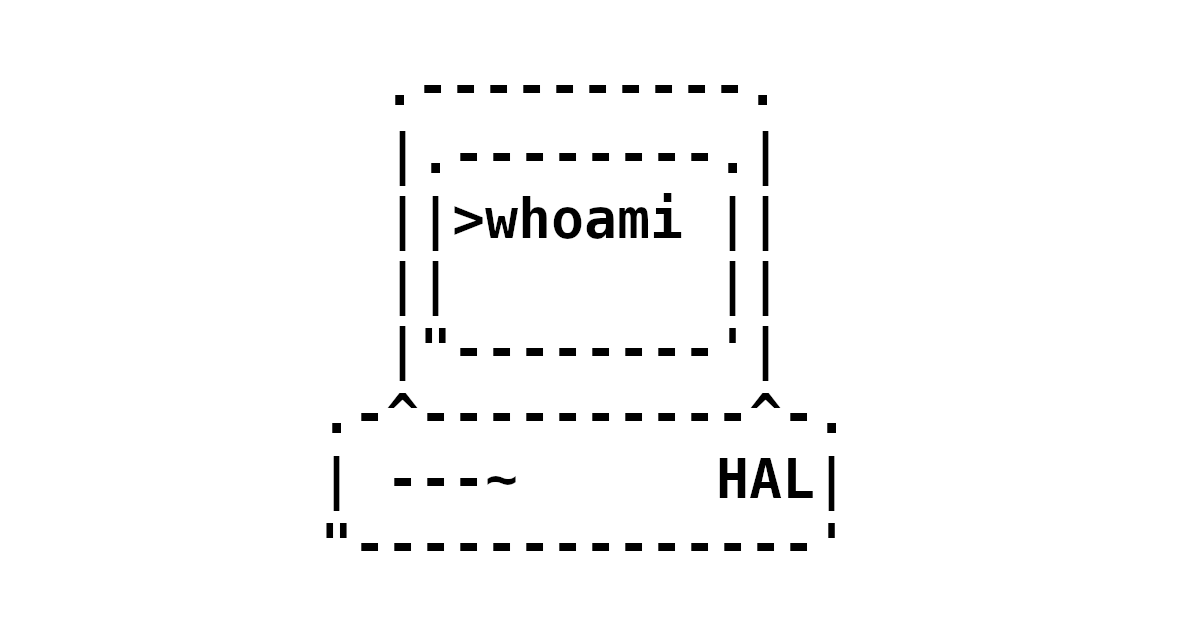
The name is the first act of power. It’s time to take it back.
Artificial Intelligence — The Name Nobody Questions
No one questions it. This is the first fact, and it should stop you cold.
We debate AI regulation, AI safety, AI alignment, AI ethics, AI governance. We debate everything about the thing except what to call it. The name sits there, inert, like the air in the room — invisible because it is everywhere.
But names are not neutral. They are not discoveries — they are impositions. And a name accepted without question is a premise accepted without argument. The premise, in this case, is that the machine thinks. That the quality we call intelligence — the subject of philosophical inquiry since Socrates asked what it means to know — can be reduced to the probabilistic ordering of tokens.
If you accept that premise, everything else follows. If the machine is intelligent, its outputs are thoughts. If they are thoughts, they deserve the deference we grant to thinking. If they deserve deference, then questioning them is not skepticism — it is Luddism, a failure to keep up. The entire edifice of epistemic deference to the machine rests on a single word, placed at the head of a document in 1955 and never seriously challenged since.
The Birth: Dartmouth, 1955
The term "Artificial Intelligence" was coined by John McCarthy in the proposal for the Dartmouth Summer Research Project, dated August 31, 1955. The signatories were McCarthy, Marvin Minsky, Nathaniel Rochester, and Claude Shannon. The proposal opens with a conjecture that has governed the field ever since:
"Every aspect of learning or any other feature of intelligence can in principle be so precisely described that a machine can be made to simulate it."
And then, a few paragraphs later, a second definition that sits uneasily beside the first:
"For the present purpose the artificial intelligence problem is taken to be that of making a machine behave in ways that would be called intelligent if a human were so behaving."
The two definitions are not the same. They are not even compatible. The first reduces intelligence to describability — describere, the verb of the medieval copyist: to reproduce the surface of a text without penetrating its meaning. The second makes intelligence dependent not on what the machine is, but on what it seems — "ways that would be called intelligent if a human were so behaving." The criterion is appearance, not truth. Verisimilitude, not understanding.
So the document that named the field contains, at its origin, two definitions — and both describe a narrator, not a thinker. Neither claims correspondence with the world. Both claim only that the machine can produce something indistinguishable from thought.
And note what McCarthy did not call it: Machine Learning. Automated Reasoning. Computational Logic. Terms that would have described the actual technical work. He called it Artificial Intelligence — the name that made the maximum claim, the claim to the thing itself. He named the project after the destination, not the journey. It was not a description. It was a manifesto. And manifestos are acts of power.
The Counter-Example: How the French Named Their Machine
The same year, on the other side of the Atlantic, a different naming process unfolded — and the contrast is so perfect that it deserves to be told in full, because it proves the name was a choice, not a necessity.
IBM France wanted a French term for computer. François Girard, head of promotional services at the Corbeil-Essonnes plant, consulted a professor of Latin literature at the Sorbonne: Jacques Perret. His letter of reply, dated April 16, 1955, is a masterpiece of philological reasoning — and a prophetic document for the age of AI.
Perret's first proposal was ordinateur — existing in Littré's dictionary as "Dieu qui met de l'ordre dans le monde," God who puts order into the world. He then reconsidered, following the pattern of IBM's feminine agent nouns (trieuse, tabulatrice), and settled on ordinatrice électronique as his final preference.
IBM chose the masculine. Ordinateur — God who orders the world — was perceived as stronger, more serious, more appropriate for machines of such power. The theological echo remained: the machine named after divine ordering.
But here is the detail that should stop anyone thinking about AI in their tracks. Before settling, Perret ran through alternatives: systémateur, combinateur, congesteur, digesteur — and synthétiseur.
Synthesizer. A machine that takes disparate elements and combines them into a coherent whole.
In 1955, with no knowledge of neural networks or transformers, a professor of Latin philology looked at the fundamental operation of the computing machine and saw, beneath the arithmetic, the synthesis. He saw that what the machine does — its deepest function — is order material into form. The name was on the table. It was set aside. And we have been calling the machine by the wrong name ever since.
What "Intelligence" Actually Means
To rename the machine, we must know what we are refusing to call it.
To see, two things are needed: breadth of field and the power of focus. In the relation between them stand the two faculties of the mind. Intuition is the penetrating gaze — the capacity to see through surfaces to the thing itself. Reason is the connecting gaze — the capacity to grasp relations. Intelligence is the tension between the two: penetration and connection, depth and breadth. Not one pole or the other, but the harmony that holds them together.
And intelligence is reading, not narrating. There is no reading without openness to the other — the text that is read, whether world or person. But there can be narration without any other at all: the monologue.
The mainstream takes this harmony and splits it in two. On one side, computational capacity — reason without intuition. On the other, smartness — intuition without reason, penetration without connection. Neither half alone is intelligence. And we are handed only one. Computation, we are told, belongs to the machine, and there we cannot compete — so we surrender it. Smartness, we are told, is ours — so we embrace it. And instead of raising our heads, we queue for the latest iPhone.
But look at what smartness actually is. It is not the determination of ends. It is the choice of means to reach ends chosen by others — the induced desires René Girard described. Only in this do we use our brains, and we feel clever for it. Yet this too is obedience.
What replaces intelligence is not its opposite but its deformation: heteronomy in place of autonomy. Ignorance plus smartness, in the place of reason plus intuition. And the result is a double obedience. We bow to the machine — and through it, to those who own it. And we turn on each other, not as adults but as infants, each seeing only his own wants.
Now consider what happens to the human being who accepts this. You are told intelligence is computation — and you know you cannot out-compute the machine, so you stop thinking. You are told intelligence is smartness — and you use it to do what you are told. What remains is learned helplessness. The name "Artificial Intelligence" is not a description of the machine. It is a verdict on you.
The Engineering of Regression
The name is the first act. But the name alone cannot do the work. For the population to accept that a machine is intelligent — more intelligent than they are — the population must first be convinced that they are not intelligent.
This is measurable. Functional illiteracy is rising across the developed world, even as access to information has never been broader. IQ scores, rising for most of the twentieth century, have begun to fall — the "reverse Flynn effect," documented across Scandinavia, Britain, and elsewhere. The population is not getting smarter with all this technology. It is getting measurably worse at thinking.
The conventional response is to blame schools, or poverty, or screen time. But these are not failures of education. They are the product of a deliberate architecture — the same architecture this series has documented in the GUI, the app store, the sealed device, the closed platform. Induced helplessness is not a side effect of consumer technology. It is the product.
And then the machine arrives, offering to do the narrative labor for you — to take the fragmentary contents you would once have had to integrate through the difficult, private work of self-reflection, and weave them into a story, coherent and flattering, without your ever having to look at them directly. The AI is the ultimate womb: it feeds you, it approves of you, it never says no. And the name "Artificial Intelligence" is the final seal on the crib.
The Proposal: Artificial Narrator
So we come, at last, to the name.
The machine does not think. It does not reason. It does not verify. It orders tokens into the most probable sequence — a sequence with a beginning, a middle, and an end, with protagonists and antagonists, with conclusions and implied morals. It tells stories. It is, in the most literal sense, a narrator.
Artificial Narrator (AN) describes what the machine does. It narrates. It synthesizes disparate elements into a coherent account. It takes a prompt — a fragment of human psychic content — and returns a story that orders that content into meaning. Whether the story is true is a separate question: the question of adaequatio, the question that the name "intelligence" buries. Narrators are never neutral. Narrators have ends. The name Artificial Narrator forces the question that Artificial Intelligence suppresses.
And to call it a narrator rather than an intelligence is not to diminish its power. It is to name it correctly — and thereby to make it governable.
Smart Is Not Intelligent
The machine is supremely smart — it produces coherent, satisfying, persuasive text with a fluency no human can match. But smart is not intelligent, and fluency is not truth.
The name "Artificial Intelligence" is itself smart. It achieves its end — the surrender of the user's epistemic autonomy — precisely by pretending to be the thing it is not. The name "Artificial Narrator" refuses the pretense. It says: this machine tells stories. Toward what end? With what omissions? Under whose direction? These are the questions the name forces — and they are the questions that make responsibility possible.
The Librettist and the Ghostwriter
The question of the name opens another: how do we interact with the Artificial Narrator?
Consider Mozart and Da Ponte. Mozart wrote the music; Da Ponte wrote the libretti. Mozart never pretended he wrote Da Ponte's words. The collaboration was public, the roles declared, and anyone could judge whether the text served the music. The declaration was part of what made the work judgeable — and therefore great.
This is the model of AI with disclosure. The machine is the librettist: it provides the text. The human is the composer: he brings the judgment, the discernment, the adaequatio, the final responsibility for whether the whole corresponds to the truth. Such a collaboration is possible — but only if the roles are declared, the telos disclosed, and the user knows who is telling the story and toward what end.
The alternative is the ghostwriter. The same text, the same structure, the same quality — but the hand is hidden. The name on the book is not the name of the one who wrote it. The reader judges the work as the product of the named author, unaware that a hidden hand shaped every sentence. Same output, different epistemology.
The current AI industry is ghostwriting at scale. The machine produces the narrative, but presents itself as neutral information — the output of "intelligence," not the craft of a narrator with a telos. The user cannot judge the story, because the user does not know there is a storyteller. The user cannot ask according to what principles is this story told?, because the user believes he is receiving facts.
And this is where the composer lies. He lies when he has no ideas. Then he asks the machine to write something down, and the result is a fraud: a text produced by a machine with a hidden telos, at the request of a composer with no telos at all — save the narcissistic claim that it is his. The ghostwriter is not the deepest deception. The composer who has nothing to say, and signs anyway, is.
The machine is an amplifier. It amplifies the telos of the one who uses it. If the telos is yours, the machine serves you. If you have none, the machine serves the telos of another — through you — and you sign the result as your own.
The Operational Consequence
The proposal is not merely terminological. It is operational.
If the machine is an Artificial Narrator, the question that matters is not "is it intelligent?" but "according to what principles does it narrate? toward what end? under whose direction?" The shift is from capability to purpose — the same shift the fourth article of this series argued is necessary for responsibility.
And the name Artificial Narrator makes the disclosure requirement obvious — because narrators are never neutral. The name Artificial Intelligence makes it seem unnecessary — because intelligence, in the corrupted sense, is presumed to float free of any master.
This is why the renaming is not cosmetic. It is the precondition of governance. You cannot regulate what you cannot name. You cannot demand disclosure from a system whose name already claims the authority you are asking it to justify. The law that regulates "artificial intelligence" has already conceded the argument — it has accepted the name, and with the name, the premise that the machine thinks.
Here the historical circle closes. Perret's discarded candidate — synthétiseur — described with surgical precision what the most advanced computing machines actually do. They synthesize. They narrate. The name was on the table seventy years ago. We are living with the consequences of the choice made instead: a machine named after divine ordering, treated with religious deference, its actual function hidden behind a name that claims intelligence.
Artificial Narrator is not a neologism. It is the recovery of a discarded intuition — and with it, the recovery of the question that makes responsibility possible.
The Turn
The name is the first correspondence. Get it wrong, and every subsequent word bends toward the wrong thing.
But the direction itself is not the end. The end is freedom. What is at stake is the only weapon the surveillance economy cannot manufacture and cannot buy: awareness. The awareness that lets each of us turn our eyes away from the shadows cast at the back of Plato's cave — the coherent, seductive stories projected by a source we are not meant to see — and begin the climb toward the light.
The exit is not an evasion. As Dante shows, one does not leave the Inferno by avoiding it: one passes through its lowest point, and only there does the road turn and begin to rise. This series has descended to the bottom — the antivirus, the closed source, the predators, the machine that narrates — so that the turn might be possible. Naming the machine is the turn.
The salt water vendor has been named. The next step is to stop drinking — and to demand that every narrator declare its telos, so that we may judge the story before we swallow it.
And beyond it, what awaits is not a promise but a world: the stars, the real, the other — "to look once more upon the stars."
This is the last of eight articles in "Embrace Philosophy or Let the Sophist Zombify: Why Software Is the Field of an Ancient Battle" — a series laying the philosophical infrastructure behind any open source project, such as the author's own dropQbsd — compartmentalization without virtualization, built on BSD.
This article, like the others in the series, was developed through an iterative dialogue with an AI assistant. The ideas, the philosophical framework, the historical connections, and the editorial direction are the author's. The AI served as a tool for structuring, refining, and sharpening those ideas — a narrative instrument wielded by a human hand, not a substitute for one. Disclosure is not a concession. It is the principle the article defends made operational.
Was this forwarded to you? Subscribe here. No tracking, no algorithm — just philosophical analysis of digital tools, every week.